The Nursing-Home Bed in Thailand: What It Costs and What It Buys
A Thai nursing-home bed is sold from THB 15,000 a month. That tier buys a shared room and a caregiver, no nurse. The three-band standard ladder, costed.
Cluster
Insurance age-out, long-term care, and dying abroad.
A Thai nursing-home bed is sold from THB 15,000 a month. That tier buys a shared room and a caregiver, no nurse. The three-band standard ladder, costed.
Bangkok hospitals publish their cancer surgery prices. Nothing in Thailand or the Philippines publishes the chemotherapy, and that is where the bill is.
Skip routine screening and your odds of an advanced-stage cancer diagnosis rise ~78% (OR 1.78). The move abroad removes the recall system that screens you — and stage decides survival.
A census of 803 published Thai hospital packages: 236 check-ups, 116 vaccines, zero for dialysis, chemotherapy, an ICU day or a bed. Both countries require publication.
Most people with clinically significant hearing loss never buy the aid. The endurance gap, and why the un-bought device feeds the isolation-to-depression cascade abroad.
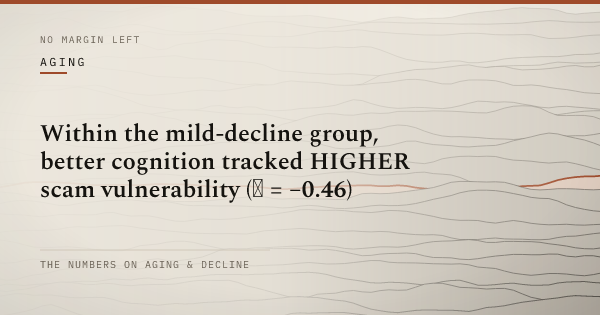
Scam and financial-exploitation vulnerability peaks in early, mild cognitive decline, not severe. It is an inverted-U, and the peak is the window no one catches.
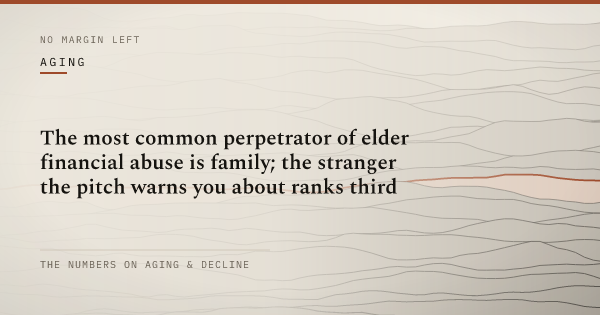
The aging expat fears the scammer and the stranger. The elder-abuse data says the most common perpetrator is family, and the most common harm is financial.
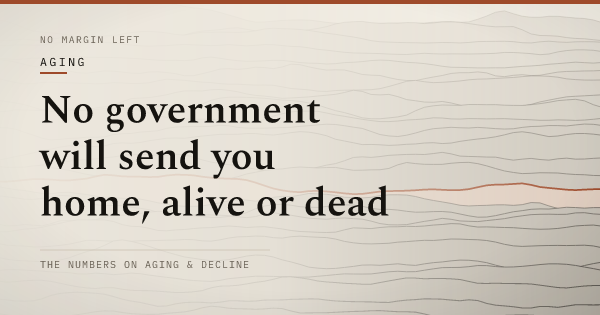
The US, UK and Australian governments pay nothing to repatriate your remains, and the US consul is legally barred from your bank account. The void, sourced.
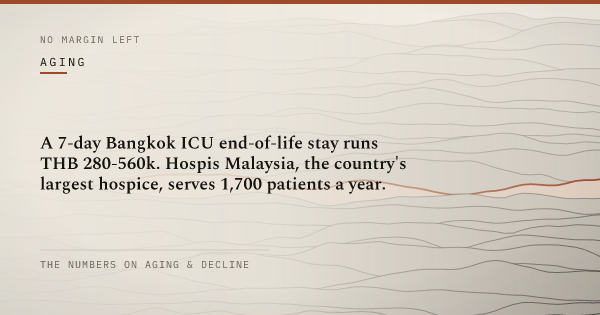
Lancet 2022: 80% of the world dies without palliative care or morphine. The morphine gap, the named charitable hospice capacity, the private-ICU dying-week bill, and the advance-directive matrix for the expat who chose to die abroad.
End-stage renal disease is a self-pay bill no expat policy renews into. A model from eGFR decline to the year the kidney and the money both expire.
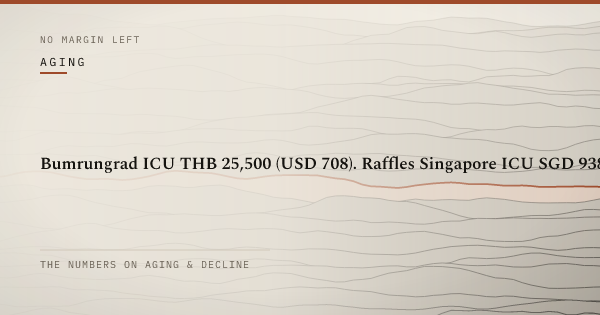
A sourced, cross-city table of standard private and ICU room rates: Bumrungrad ICU THB 25,500, Raffles SG ICU SGD 938, Lam Wah Ee Penang ICU MYR 320. And why the rate card is 25 to 35% of the actual bill.
The IPMI brochure says renewable to 99. The renewal letter, after a Type 2 diabetes diagnosis at 62, says four things instead. None of them say the brochure was wrong.
Verified 2026 air-ambulance route prices, what IPMI evacuation cover actually does (Singapore, not home), the age curve that thins at 75 and dissolves at 85, and the line where evacuation is the wrong call.
Chiang Mai dementia care at $2,300-4,300/month is a snapshot of a curve. Statutory floor, nurse shortage, domestic demand, and the absence of insurance backstop projected to 2035.
Thailand’s O-A retirement visa requires a policy the market is least willing to write. The OIC-approved insurer × age × certificate matrix, and what the renewal week actually looks like at 71, 74 and 76.
A younger wife lowers a husband's mortality by about 11%. The same study finds she pays for it in her own life expectancy. The actuarial case.
Medicare pays nothing where you live but still bills $202.90 a month; the NHS ends the day your move is permanent. Two systems, two failure modes, sourced.
The O-A visa is not a one-time hurdle but a three-gate solvency re-test run every year for life, each gate hardening with age. Decomposed and costed.
Widowed men carry a mortality hazard around 1.27, peaking near 1.41 in the first six months. Abroad and alone, every buffer the figure assumes is gone.
The embassy-hosted quote to fly a body home from Thailand is about 100,000 baht. The UK funeral trade's own long-haul ranges start at £5,000, before the funeral. The repatriation runbook, costed by leg, under a 30-day clock.
The isolation-to-dementia science is settled; the living-alone risk is documented. The move abroad raises that risk and removes the detection.
A live-in carer in Thailand or the Philippines costs under US$600 a month. The number is real, and it answers the wrong question. The care ladder, costed.
Cheap care is a per-month number. What ends estates is duration: a multi-year dementia trajectory, paid uninsured, with no one to hold the tier down.
A Thai private hospital wants 50,000-200,000 baht in cash before it treats you. The cost ladder of one uninsured emergency, and the medevac tail beyond it.
Rejection at 75 starts a forced choice among four paths, one of them deliberate uninsurance in the highest-risk decade. The matrix, costed.
Sixteen expat insurers, one question: until what age will you write a new policy, and until what age will you keep me. Answered only from their own pages.